

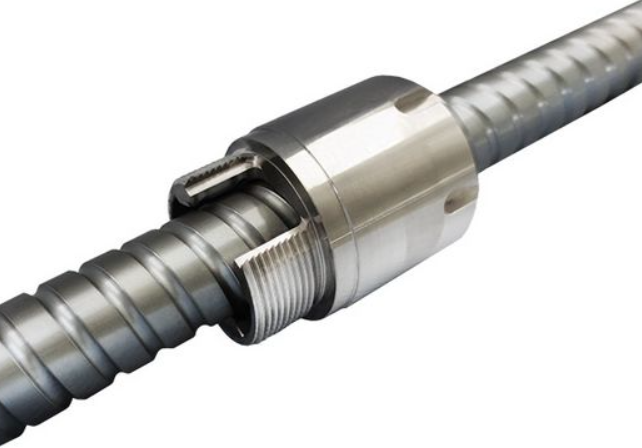
Ball screw assemblies consist of a screw that is driven by a rotary motor, a ball nut with recirculating ball bearings that translates along the screw to convert rotary motion into linear motion via attachment to a carriage, and is supported by thrust or angular contact bearings on one or both ends of the ball screw to support axial and radial loads.
Ball screw component failures can manifest in various ways. Excessive wear to the ball nut, screw, ball bearings or support bearings can affect the ability of the system to precisely control the position of the load being moved and can create excessive backlash, vibration or ball bearing noise. Internal frictions will increase causing the required torque to turn the screw to increase to the point where system failure occurs and the ball screw is no longer operational. This can cause significant system downtime to repair or replace worn or damaged components.
Regular preventive maintenance of the ball screw system can ensure reliable, trouble-free operation. The screw must be wiped off to remove debris and old lubricant residue and then replenished with new lubricant. The frequency for ball screw maintenance is determined by the duty cycle and environment in which the ball screw operates. Increased inspections after installation and startup are recommended to monitor cleanliness, alignment and operation to ensure the ball screw remains properly lubricated and to develop the right preventive maintenance schedule for the system.