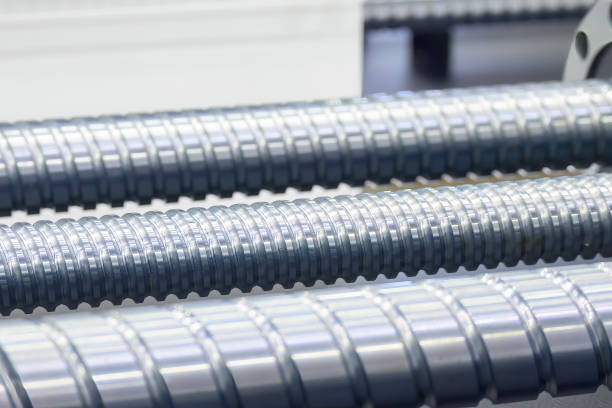
Ball screw recirculation
Ball screw recirculation method refers to the process of circulating the ball bearings in a ball screw assembly. A ball screw is a mechanical device used to convert rotational motion into linear motion. It consists of a threaded shaft (screw) and a nut with ball bearings inside. When the screw rotates, the ball bearings move along the thread, causing the nut to move linearly.
In order to maintain proper operation of the ball screw, the ball bearings must be recirculated continuously. This is accomplished by a recirculation system that typically consists of a tube or channel that guides the balls from one end of the screw to the other.
There are several different recirculation methods used in ball screw assemblies, including end cap, tube, and deflector methods. The end cap method involves using a cap at each end of the screw to contain the balls, while the tube method uses a tube to guide the balls from one end of the screw to the other. The deflector method involves using a deflector plate to guide the balls from one side of the nut to the other.
The choice of recirculation method depends on the specific application and design requirements. Proper recirculation is essential for maintaining the accuracy and efficiency of the ball screw assembly.